
Kidney Stone Treatment
Understanding Kidney Stones
Kidney stones are hard deposits made of minerals and salts that form inside the kidneys. These stones can vary in size and may cause intense pain, blood in urine, and difficulty while urinating. Early diagnosis and appropriate treatment are essential to avoid complications and preserve kidney health.
What Causes Kidney Stones?
The exact reason for stone formation is not known but a lot of factors may contribute to stone formation including:
Inadequate water intake
High-salt diet
- Obesity
Sedentary lifestyle
Family history of kidney stones
Medical conditions like urinary infections or hormonal imbalances
- Diet rich in oxalates
Symptoms to Watch For
Sharp pain in the back or lower abdomen
Painful urination
Blood in urine
Nausea or vomiting
Frequent urge to urinate
Fever or chills (if infection is present)
Accurate Diagnosis
At our clinic, we use a range of diagnostic tools to locate and assess kidney stones:
Ultrasound (KUB)
Non-contrast CT scan (NCCT-KUB)
Urine and blood tests
Metabolic evaluations for recurrent cases
Treatment Options
Conservative Management
Most of the stones in the ureter usually pass on their own with medications. We offer a combination of medications; science backed that improve the chances of stone expulsion
Minimally Invasive Procedures
When required, our team offers advanced, low-pain procedures:
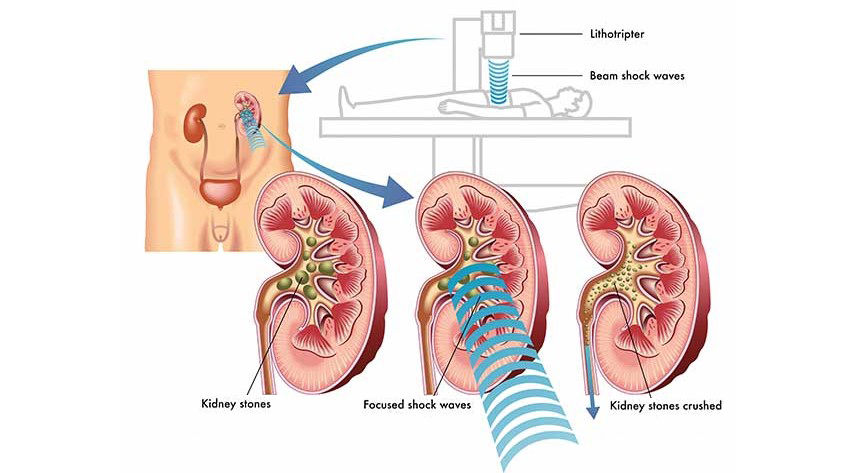
ESWL (Shockwave Lithotripsy) – Non-invasive technique to break stones into smaller fragments. High energy rays are focussed on stone and this leads to the breaking of the stone in the kidney.
URS (Ureteroscopy with Laser) – A small scope is used to access and remove or break the stone. For stone in ureter, a rigid tube is passed through urethra into the bladder and then ureter to fragment the stone.

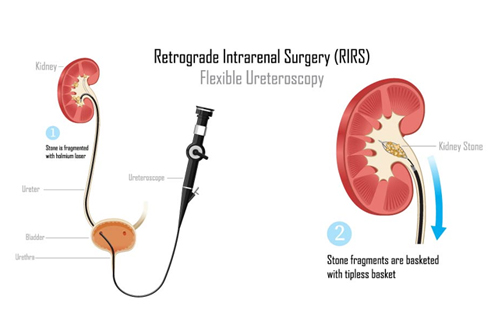
RIRS (Retrograde Intrarenal Surgery) – Endoscopic laser procedure for kidney stones. A flexible ureteroscope is placed into the kidney through the ureter and the stone is pulverized to dust with a laser. Stone in all calyces can be accessed and it allows stones to be removed with minimal bleeding and no risk of injury to kidney or surrounding organs.
PCNL (Percutaneous Nephrolithotomy) – A keyhole surgery for large or complex stones. Through a small hole in the back access to the kidney is obtained and stone removed after fragmentation. This procedure allows us to remove large stones with minimal damage to the kidney and fast recovery of patients.

Post-Treatment Care
We focus not just on removal but also on long-term health:
Regular monitoring and imaging
Metabolic analysis to identify stone-forming tendencies
Diet and lifestyle counselling
Prevention-focused treatment plans
Why Choose Us for Kidney Stone Care?
We offer comprehensive and modern care for kidney stones. With experienced doctors, state-of-the-art technology, and a patient-centric approach, we ensure effective treatment with minimal downtime. Our focus extends beyond removal — we aim to prevent recurrence and maintain optimal kidney health.